Galeano Orthodontics Book Appointment

Types of Braces

From traditional metal braces to virtually invisible clear aligners, we offer options to fit every smile and lifestyle.

Traditional metal braces on teeth

Traditional Metal Braces

Traditional metal braces are the most common type of braces and are more comfortable today than ever before. Made of high-grade stainless steel, metal braces straighten your teeth using metal brackets and archwires. With metal braces, you have the option of adding colored elastics (rubber bands) for a more unique and colorful smile.

Self-ligating braces on teeth

Self-Ligating Braces

Self-ligating brackets are defined as "a dental brace, which generally utilizes a permanently installed, moveable component to entrap the archwire". Self-ligating brackets have also been designed which do not require a movable component to hold the wire in place. Self-ligating braces may be classified into two categories: passive and active. These braces were typically made from stainless steel but, in some cases, are available in ceramic or polycarbonate.

Clear ceramic braces on teeth

Clear (Ceramic) Braces

Ceramic braces are made of clear materials and are therefore less visible on your teeth than metal braces. For this reason, ceramic braces are used mainly on older teenagers and adult patients who have cosmetic concerns. While they are visually less prominent, they do require more attention to oral hygiene as ceramic braces are larger and are more brittle than their metal counterparts. For these reasons, ceramic braces tend to be used more on upper front teeth than on lower teeth. Learn more about clear braces.

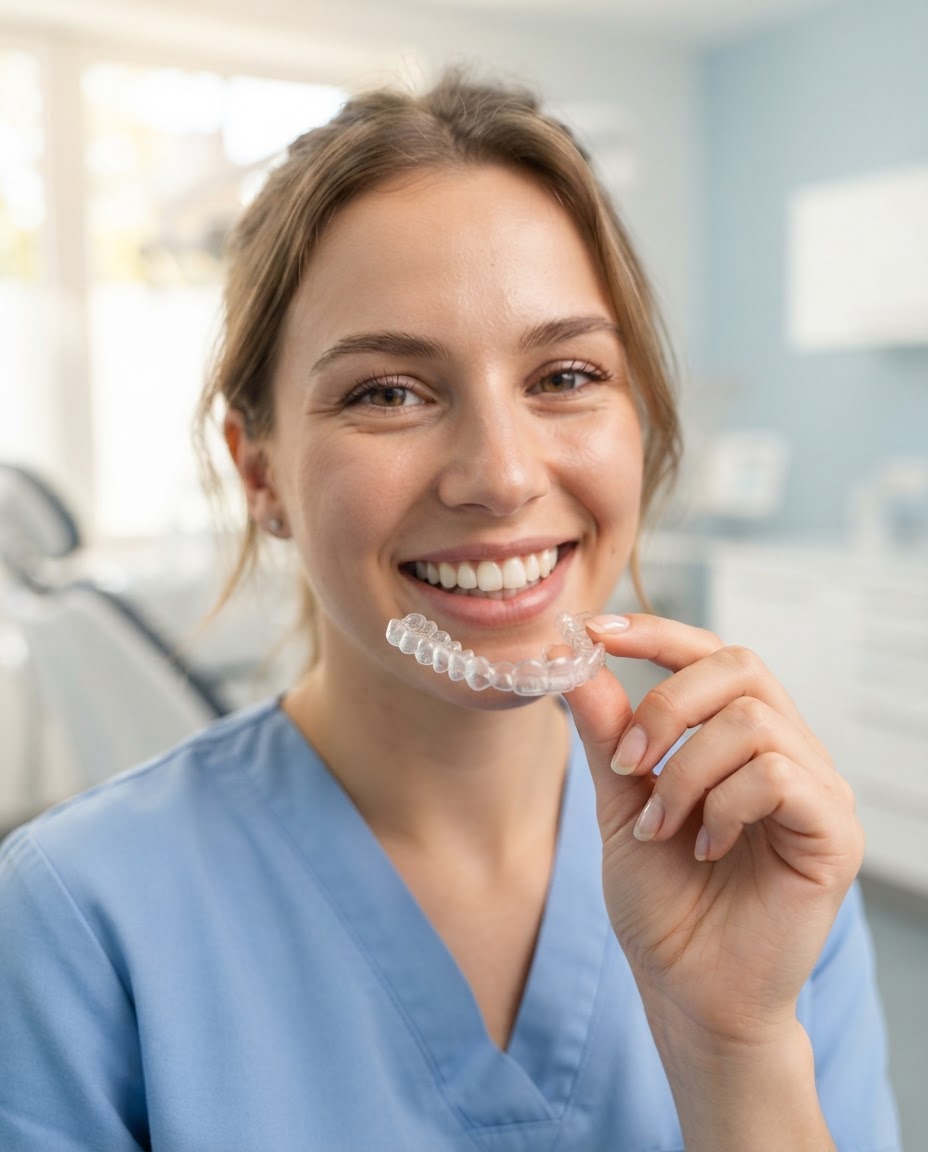
Clear aligner tray held in a hand

Clear Aligners

Clear aligners are a series of invisible, removable, and comfortable acrylic trays that straighten your teeth like braces. Not only are the aligners invisible, they are removable, so you can eat and drink what you want while in treatment, plus brushing and flossing are less of a hassle. The aligners are comfortable and have no metal to cause mouth abrasions during treatment. Learn more about Invisalign® clear aligners.

Lingual braces placed behind the teeth

Lingual Braces

Lingual braces are hidden behind the teeth and are therefore "invisible" when you smile. Lingual braces are 100% customized to match the shape of your teeth; the metal appliances are created uniquely for you. Lingual braces are a very reasonable option for athletes, models, actors and actresses, musicians who play wind instruments, and adult professionals.

Which braces are right for you?

Every option straightens teeth. They differ in how they look, how they feel and how often you visit us.

Most popular

Metal braces

Small, strong and proven. Today's brackets are smaller than ever, and kids and teens love choosing their band colors at each visit.

Discreet

Ceramic braces

Tooth-colored brackets that blend in with your smile. A favorite of teens and adults who want fixed braces without the metal look.

Learn about clear braces →
Fewer adjustments

Self-ligating braces

A built-in clip holds the wire instead of elastic ties, which can mean quicker visits and smoother tooth movement.

Braces at a glance

How the main types compare in day-to-day life.

FeatureMetalCeramicSelf-ligating
AppearanceVisible, with fun color optionsTooth-colored, blends inMetal or clear, no elastic ties
StrengthStrongestSlightly more fragileStrong
Visit timeRegular adjustmentsRegular adjustmentsOften quicker visits
StainingNoneTies can stain; changed at each visitMinimal
CostMost affordableA bit higherA bit higher
Best forKids, teens and complex casesTeens and adults who want a discreet lookPatients who want fewer, shorter visits
Dr. Galeano will show you each option at your complimentary consultation and recommend the one that fits your bite and your goals.

Braces questions, answered

What families ask us most often before getting braces.

How long will I wear braces?

Most treatments take 18 to 24 months. Simple cases can finish in under a year and complex bites can take longer. You will get an estimate before you start, and keeping every appointment keeps you on schedule.

Do braces hurt?

Getting braces on does not hurt. Your teeth will feel tender for a few days after they go on and after each adjustment. Soft foods and an over-the-counter pain reliever take care of it.

Can I choose colors?

Yes. With metal braces you pick the color of the tiny elastic ties at every visit. Go with your school colors, a holiday theme or something new each time.

What can I not eat with braces?

Avoid hard, sticky and crunchy foods such as ice, caramel, popcorn, nuts and whole apples, which can break a bracket or bend a wire. Almost everything else is fine when cut into smaller pieces.

How often do I come in?

About every 4 to 6 weeks for a short adjustment visit. Between visits, call us if anything feels loose or pokes. See our emergency care tips.

Ready to start your smile?

Your first appointment is complimentary. Tell us a little about you and we will take care of the rest.

Request an Appointment