
TMJ & TMD Treatment
Millions of Americans suffer from chronic facial and neck pain as well as severe, recurring headaches. In some cases, this pain is due to Temporomandibular Disorder, also known as TMD.
Temporomandibular Disorder
Your temporomandibular joints, or TMJs, connect your lower jawbone to your skull. These joints get a lot of use throughout the day as you speak, chew, swallow, and yawn. Pain in and around these joints can be unpleasant and may even restrict movement.
Symptoms of TMD include:
- Pain in the jaw area
- Pain, ringing, or stuffiness in the ears
- Frequent headaches or neck aches
- Clicking or popping sound when the jaw moves
- Muscle spasms in the jaw area
- A change in the alignment of top and bottom teeth
- Locked jaw or limited opening of the mouth
If you notice that you are experiencing any of these symptoms, let your doctor know at your next appointment. Your doctor can help determine if you have TMD and create a customized treatment plan to help relieve your symptoms.
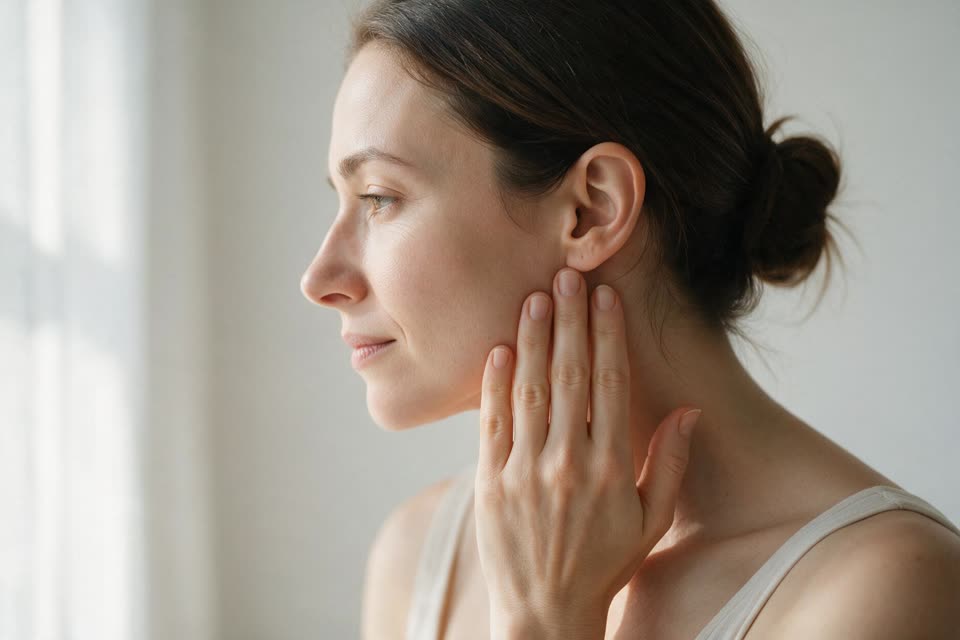
Not All Jaw Pain Is Associated with TMD
If you feel that you might have TMD, it is always important to see your dentist and receive an exam. However, not all jaw pain is associated with TMD, and if you do not have TMD there are many different preventive steps you can take to maintain a healthy, strong smile.
- Relax your face, "lips together, teeth apart"
- Avoid grinding your teeth
- Avoid all gum chewing
- Don't cradle the phone receiver between your head and shoulder. Either use a headset or hold the receiver to your ear
- Chew food evenly on both sides of your mouth
- Do not sit with your chin rested on your hand
- Practice good posture. Keep your head up, back straight, and shoulders squared
Many people get TMD without ever having braces. Symptoms usually wax and wane regardless of whether braces are worn.
Understanding your jaw
TMD has many causes. The first step is finding yours.
What patients notice
Jaw pain or tiredness, clicking or popping, headaches on waking, ear pain without infection, and a jaw that locks or does not open fully.
The whole picture
How your teeth fit together, how the joint moves, muscle tenderness, wear on the teeth and habits like clenching or grinding.
Conservative first
Most patients improve with a custom night guard, habit changes and, when the bite is the cause, orthodontic correction. Surgery is rarely needed.
Symptoms and what usually helps
A guide, not a diagnosis. Dr. Galeano will examine you before recommending anything.
| Symptom | May point to | What usually helps |
|---|---|---|
| Clicking or popping | The joint disc slipping as you open | Monitoring, jaw exercises, night guard if painful |
| Jaw pain or headache on waking | Night-time clenching or grinding | Custom night guard, stress management |
| Pain when chewing | Overworked jaw muscles or an uneven bite | Soft diet for a while, bite evaluation, orthodontic correction |
| Jaw that locks | Disc displacement | Prompt evaluation, gentle exercises, guard |
| Worn or chipped teeth | Long-term grinding | Night guard, correcting the bite, restoring worn teeth |
TMJ and TMD questions, answered
What patients with jaw pain ask us first.
Is TMD permanent?
Usually not. Most cases improve or resolve with conservative care such as a night guard, habit changes and time. Chronic cases need ongoing management, but they are the minority.
Will I need surgery?
Very rarely. Surgery is reserved for structural joint problems that do not respond to any other treatment. Everything we try first is non-invasive.
Can orthodontics help TMD?
When an uneven bite is overloading the joint or muscles, correcting the bite can reduce symptoms. When the cause is muscular or habit-related, a guard and habit changes come first. The exam tells us which.
What does a night guard do?
It is a custom-fitted plastic guard worn while you sleep. It keeps your teeth from grinding against each other, relaxes the jaw muscles and protects your enamel.
When should I call right away?
If your jaw locks and will not open or close, if you have sudden severe pain, or if the pain follows an injury. Those need to be seen promptly.
Ready to start your smile?
Your first appointment is complimentary. Tell us a little about you and we will take care of the rest.
Request an Appointment